The luxury handbag industry has a historical dirty secret. From heavy metal pollution in river deltas to the carbon intensive nature of livestock, tanning traditional leather is a logistical and ethical burden. But 2026 marks the definitive turning point where lab-grown alternatives finally match the "hand-feel" and "patina-potential" of heritage calfskin.
I. The Bio-Material Revolution: Beyond Synthetic Substitutes
For decades, "vegan leather" was a euphemism for plastic—specifically Polyvinyl Chloride (PVC) or Polyurethane (PU). While animal-free, these petrochemical-based materials take centuries to decompose and shed microplastics into the ecosystem. In 2026, the industry has shifted toward "Bio-Rational" materials.
These are not imitations; they are biological recreations. We are seeing a move away from the surface-level mimicry of the 2010s toward deep material engineering. The goal is no longer just to make something that *looks* like leather, but something that behaves like it at a molecular level—absorbing oils, resisting moisture, and developing a unique character over decades of use.
II. The Mycelium Frontier: Scaling the Scarcity
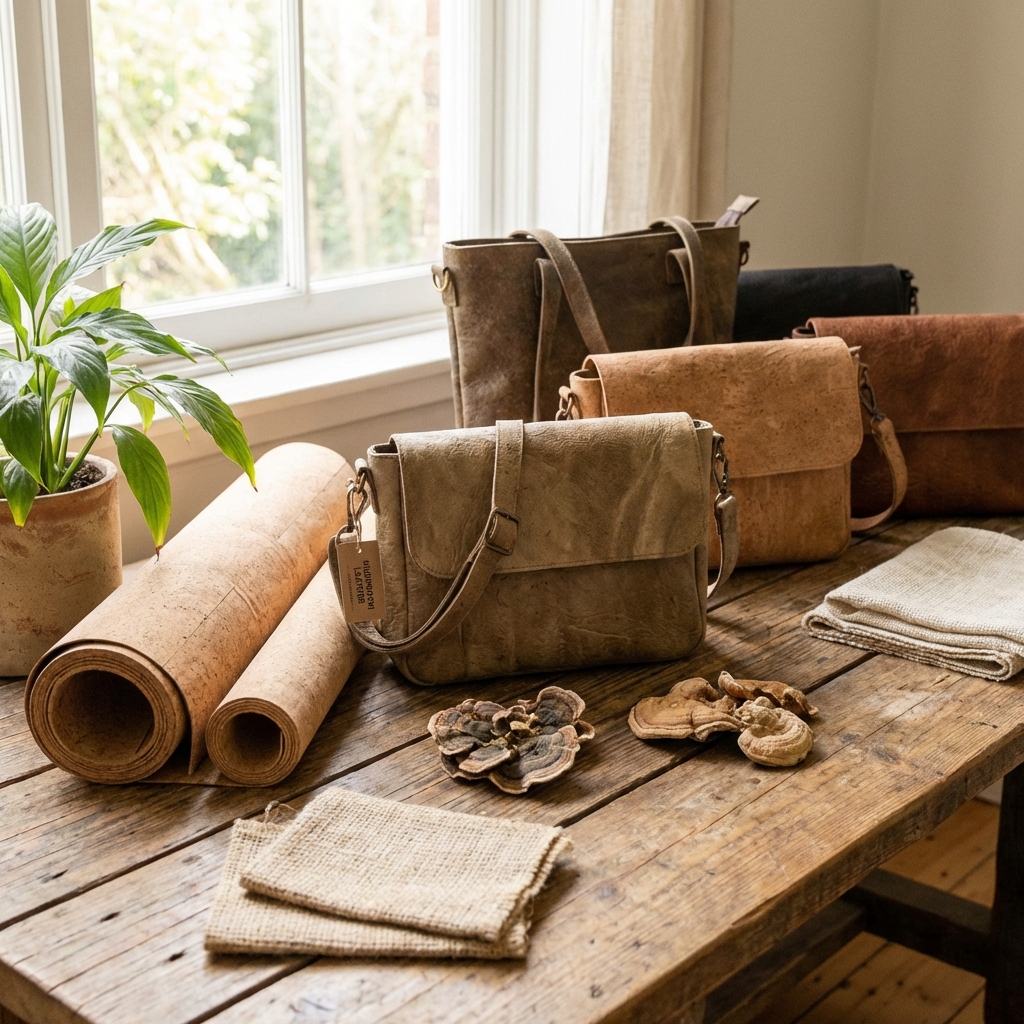
The clear frontrunner in the 2026 sustainable landscape is **Mycelium**. Grown from the root structure of mushrooms in controlled vertical environments, mycelium offers a consistency that animal hides cannot match. Stella McCartney was the first to bring this to the commercial runway with the *Frayme Mylo*, but the real industry shockwave came with Hermès and their **'Sylvania'** partnership.
Developed with biotechnology startup MycoWorks, Sylvania represents a hybrid of high-tech growth and traditional tanning. The mycelium is "grown to spec" in rectangular sheets, eliminating the 30% wastage typical of irregular animal hides. It is then finished in France using heritage tanning techniques. This "Tech-Artisanal" fusion is the blueprint for the next generation of investment bags.
III. The Material Performance Index
As we audit the market in 2026, not all "eco" materials are created equal. Investors should understand the durability lifecycle of their assets:
| Material Class | Innovation Lead | Durability Score | Carbon ROI |
|---|---|---|---|
| Mycelium (Fine Mycelium™) | MycoWorks / Hermès | 9.5/10 | High |
| Cactus (Desserto®) | Givenchy / Fossil | 8.0/10 | Very High |
| Grape (Vegea™) | Bentley / Ganni | 7.5/10 | Medium |
| Lab-Grown Collagen | VitroLabs | 10/10 | Neutral |
IV. The "Green Premium" and Consumer Behavior
A significant barrier to entry remains the "Green Premium." In 2026, a bio-crafted tote typically costs 15% to 25% more than its bovine counterpart. However, luxury conglomerates have successfully reframed this cost as an "Ethical Dividend."
For the modern Gen Z and Millennial collector, the status associated with a bio-material bag is higher than that of a traditional skin. It signals intellectual curiosity and a commitment to "Future Heritage." The brands that have successfully integrated these materials (like **Bottega Veneta** with their recycled textile Intrecciato) are seeing a direct correlation between sustainability and brand desirability among high-net-worth individuals under 40.
V. Technical Challenge: The Patina Problem
The final hurdle for sustainable luxury is the **"Aging Aesthetic."** One of the reasons a vintage Hermès or Chanel bag grows in value is because animal leather ages gracefully; it tells a story. Lab-grown materials have historically been "too perfect," resisting the natural wear that collectors crave.
The next two years of innovation are focused on adding "biomimetic variables"—introducing intentional irregularities into the lab-growing process so that no two bags are identical. By 2027, we expect to see the first "Patina-Guaranteed" bio-leathers hitting the ultra-luxury market, effectively closing the gap between the lab and the farm.
When looking for long-term holds in sustainable materials, focus on "Material Exclusivity." A brand that owns its own growth technology (like the Hermès/MycoWorks vertical) is a much safer bet than a brand using third-party, mass-market eco-textiles. Ownership of the material is the new ownership of the craft.
Conclusion
Sustainable luxury is no longer a niche marketing gimmick; it is an existential requirement. As global supply chains face increasing regulatory scrutiny and climate pressure, the "Mushroom Bag" is not just a trend—it is a lifeline. In 2026, we are finally realizing that the most beautiful accessory is one that leaves no trace on the world it inhabits.