
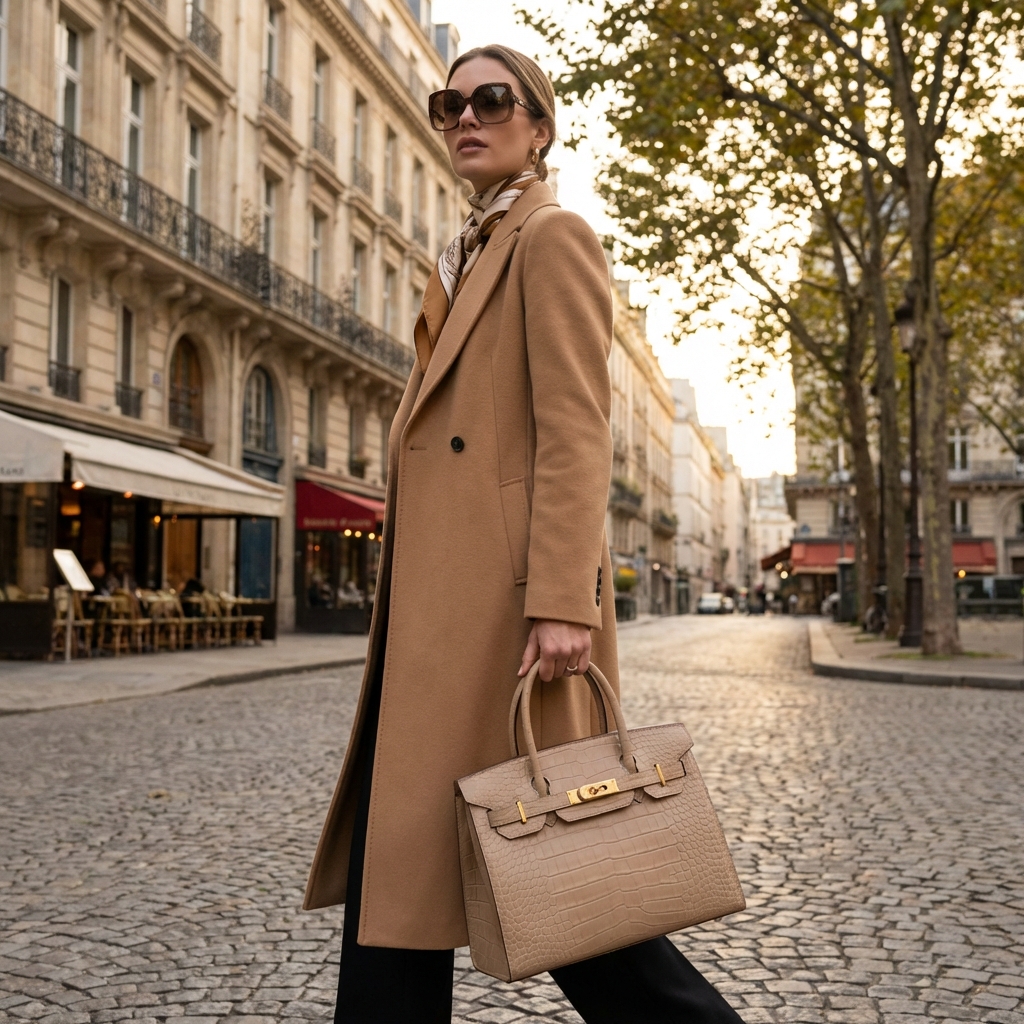
For decades, the stock market was the playground of the wealthy. But ask any specialized auction house in 2026, and they will tell you: the S&P 500 has nothing on a pristine Togo leather Birkin 30 in a classic neutral.
The "Holy Trinity" of handbag investments—Hermès, Chanel, and Louis Vuitton—has outperformed gold, real estate, and traditional art over the last ten years. But with Chanel's aggressive 60% price hikes since 2020 and Hermès' tightening of artificial scarcity, the landscape for the 2026 collector is drastically different. Which brand truly holds the crown for the best Risk-Adjusted Return?
I. The Hermès Arbitrage: Scarcity as a Financial Instrument
The core value proposition of Hermès lies in its Quota System. In 2026, this system has transcended mere exclusivity to become a form of institutional gatekeeping. You cannot simply walk into the Rue du Faubourg Saint-Honoré boutique and buy a Birkin or Kelly. You must cultivate a relationship, building a "profile" on non-quota items—ranging from porcelain home goods to silk scarves and ready-to-wear.
This barrier to entry creates a massive imbalance between supply and demand, resulting in an immediate arbitrage opportunity once the bag leaves the store. A Birkin 25 in Epsom leather that retails for approximately $11,500 can be listed on the secondary market within hours for $28,000 to $34,000. This 150%+ instant appreciation is a phenomenon unique to Hermès, making it the highest liquidity "quick-flip" asset in the luxury sector.
II. Chanel’s Pricing Strategy: The High-Stakes Gamble
Chanel has adopted a radical strategy: force-positioning. By raising the price of a Classic Medium Flap from $5,800 in 2019 to nearly $13,000 in 2026, the house is attempting to align itself with the Hermès brand equity. However, for investors, this creates a **"Pricing Gap Paradox."**
Unlike Hermès, Chanel bags do not currently command a massive premium on the secondary market. If you buy a new Classic Flap at retail for $12,500 today, its immediate resale value is likely closer to $9,500. For the investor, Chanel is a "Long Horizon" play. You are betting that in 15 years, the retail price will be $25,000, and your today's purchase will seem like a bargain. It is a hedge against inflation rather than an arbitrage play.
III. The Resale Quality Divergence
A critical factor in 2026 valuations is **Material Heritage**. Collectors are increasingly vocal about the quality of modern production. This has led to a surge in the value of "Neo-Vintage" pieces—specifically Chanel bags produced prior to 2008 which featured 24k gold-plated hardware and higher-density lambskin.
At current auctions, a vintage 1990s Classic Flap in excellent condition often outperforms a brand-new 2026 model in terms of percentage growth. For Hermès, the "Box Calf" leather—a heritage material that is difficult to maintain but develops a mirror-like patina—has seen a 40% value surge as younger Gen Z collectors move away from the durable, pebbled Togo and Epsom leathers in favor of artisanal rareties.
The Performance Metric: 5-Year CAGR (2021-2026)
| Asset Type | Appreciation (%) | Risk Profile |
|---|---|---|
| Hermès Birkin 25 (Rose Sakura/Rare) | +112% | Low (Supply-Limited) |
| Hermès Kelly 28 (Etoupe/Classic) | +88% | Very Low |
| Chanel Classic Flap (Medium/Black) | +42% | Medium (Retail-Dependent) |
| Physical Gold (per oz) | +31% | Global Hedge |
| Bitcoin / Digital Assets | Volatility Var. | Extremely High |
IV. Implementation: Building a Diversified "Bagfolio"
For the serious collector in 2026, diversification is key. We recommend a **70/30 Blueprint**. 70% of your holdings should be in "Heritage Neutrals" (Hermès Gold, Noir, and Chanel Black with Gold Hardware). These are the blue-chip stocks of the closet; they will never go out of style and have a global liquidity pool.
The remaining 30% can be allocated to "Speculative Rarity"—limited edition runs like the Hermès Faubourg Birkin or Chanel's Metiers d'Art pieces. These carry higher risk but have the potential for 300% growth if the collection becomes a historical landmark.
V. The Verdict: Who Wins in 2026?
If we look strictly at **Market Velocity**, Hermès wins by a landslide. The ability to liquidate a Mini Kelly 20 within 24 hours at a 100% profit is a financial anomaly that no other luxury brand can match. It is essentially a physical bearer bond.
However, if we look at **Market Accessibility**, Chanel is the winner. While expensive, you can still purchase a piece of the house's history without a background check and a multi-year waiting list. For the modern woman looking to park capital in a tangible asset she can actually wear, Chanel remains the primary vehicle.
Watch the **Hermès Constance 18**. While the Birkin and Kelly get the headlines, the Constance has quietly seen a 25% value hike in the last 12 months as the "Quiet Luxury" movement seeks out bags without top handles. It is the sleeper hit of the investment world.
Conclusion
Handbags are no longer just fashion; they are a recognized asset class. In a volatile global economy, a leather bag made by a single artisan over 40 hours represents a store of value that digital pixels cannot replicate. Whether you choose the dominance of Hermès or the classic prestige of Chanel, your closet is now your bank vault.