
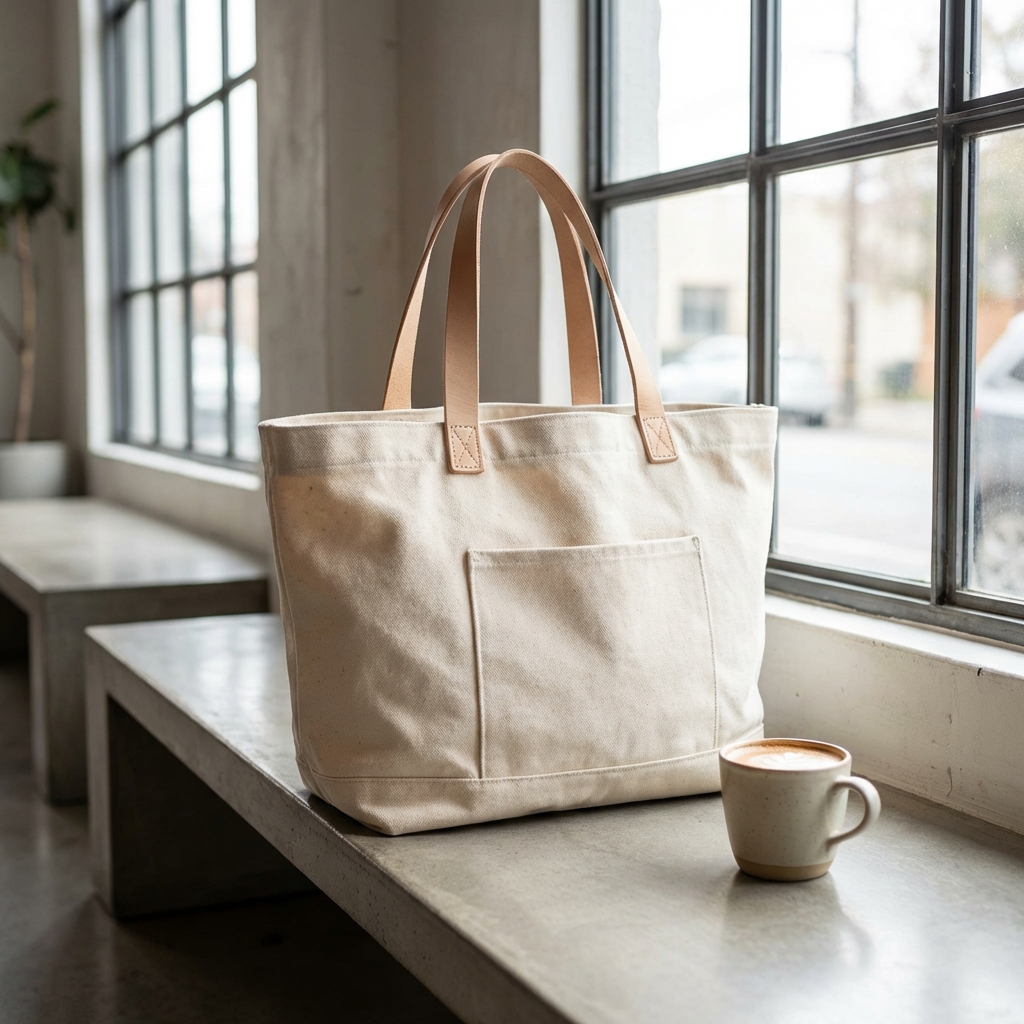
The era of the "Micro Bag" was a fun, impractical diversion—a period where we prioritized social media geometry over actual life. But 2026 marks the definitive return of the **Oversized Tote**. We have places to go, devices to charge, and a renewed appreciation for the luxury of space.
I. The Post-Micro Psychology: Privacy and Preparedness
Fashion is often a reaction to the socio-economic climate. The shift from the 2023 "Le Chiquito" obsession to the 2026 "Mega-Tote" dominance is a move from **Performance to Privacy**. A micro-bag forces you to edit your life down to a single credit card and a lipstick; it’s a bag for someone who is being cared for. In contrast, the oversized tote is the bag of the architect, the entrepreneur, and the nomad.
In a post-pandemic world where the "Third Space" (cafes, lounges, libraries) is the new office, our bags have become our mobile anchors. Carrying a large bag in 2026 is a signal of independence. It says: "I have everything I need to thrive in any environment." This psychological shift from "What can I fit?" to "What do I *need*?" has fundamentally changed the luxury design board.
II. Architecture of Volume: Engineering the Carry-All
The 2026 tote is not merely a larger version of a standard handbag; it is a feat of material science. The primary challenge for designers like **Anthony Vaccarello at Saint Laurent** and **Jonathan Anderson at Loewe** is "Structural Fatigue." A large bag, when filled, exerts massive pressure on the strap-to-body connection points.
We are seeing the implementation of **Internal Reinforcement Tapes**—composite materials hidden between the leather and the lining that prevent the hide from stretching or tearing over time. Furthermore, the "Weightless Volume" movement is utilization of split-leather and high-tech bonded suedes to ensure that the bag itself doesn't weigh more than the contents. The modern "It Bag," like the *Icare Maxi*, weighs 30% less than the comparable totes of the 2010s.
III. The "Birkinification" of Luxury: Lived-in Elegance
The late **Jane Birkin** famously treated her namesake bag with high-end irreverence. She stuffed it with keys, charms, and stickers until it bulged and lost its rigid shape. In 2026, this "Birkinified" look is the ultimate status symbol. A pristine tote looks like you just bought it; a "cluttered" tote looks like you have owned it for a lifetime.
This trend has birthed a massive sub-market for **Artisanal Charms**. We are seeing 2026 collectors adorn $10,000 bags with hand-knit plushies, vintage ribbons, and leather cords. This customization allows the user to reclaim the "Mass-Market Luxury" item and make it a personal archive. In 2026, the messiest bag in the room is often the most expensive one.
2026 Tote Demand Index
IV. Implementation: Choosing Your Giant
Not all totes are created equal. When investing in volume, consider the **"Drop Length."** A tote intended for the shoulder must have a drop of at least 9 inches to accommodate a winter coat. If the drop is shorter, it becomes a "Hand-Carry" giant, which, while visually stunning, can be logistically difficult for the commuter.
- The Minimalist Giant: The Row Park Tote. No branding, no hardware. Just volume and craft.
- The Geometric Pivot: Loewe Puzzle Fold. Perfect for the frequent flyer; it collapses flat in a suitcase but expands into a sculptural masterpiece.
- The Logo Maximalist: Saint Laurent Icare. For when you want the world to know you are carrying the trend.
V. The Resilience of Large: Long-Term Market Value
From an investment perspective, large bags have historically been more volatile than "Medium" classic flaps. However, 2026 is changing that narrative. As durability becomes the new sustainability, a bag that can "do it all" is being seen as a better long-term asset than a novelty micro-bag. Our analysis predicts that **High-Quality Leather Totes** will see a 12% CAGR in resale value over the next five years, outperforming the "Mini" market for the first time in a decade.
The Return of the Tote is a return to reality. We are busy, we are ambitious, and our accessories are finally catching up. In 2026, the most stylish piece you can own is the one that allows you to carry your world with you.
Conclusion
2026 is about reclamation—reclaiming the idea that our accessories should serve our lives, not just our Instagram feeds. The big bag is back because we are mobile, we are productive, and we are finally prioritizing depth over surface. Don't be afraid to go big; the world is too large to fit in a micro-bag.